

Influenza Variant Subclade K: Winter Advisory
Winter is officially here, and the influenza season has started earlier than usual.
Particular caution is required this year, as experts point out that Subclade K—a variant of the Influenza A (H3N2) virus—may become the dominant strain globally.
In this update, we summarize the latest status of Subclade K, its characteristic symptoms, and specific precautions for dementia patients and their families.
1. What is Influenza Variant Subclade K ?
Current Status
Overview and Concerns
Subclade K is a lineage of the Influenza A (H3N2) virus, commonly known as seasonal flu.
Immune Evasion : The virus has mutated on its surface, raising concerns that immunity acquired from past infections or conventional vaccines may be less effective.
Risk of Severity : The A (H3N2) strain generally poses a higher risk of severe illness in the elderly and those with underlying conditions, making the spread of this variant particularly concerning.
Current Outbreak Status
Early Outbreak Globally : In several regions across the Northern Hemisphere, including the UK and Japan, the number of flu patients has surged earlier than usual.
Reports suggest Subclade K is driving this spread.
Dominance of H3N2 : Among currently detected influenza viruses, the H3N2 type (including Subclade K) is the predominant strain.
2. Characteristic Symptoms and Key Differences
Symptoms of H3N2 (including Subclade K) generally include high fever, cough, sore throat, and fatigue, similar to conventional flu.
However, reports this year suggest a shift in symptom trends.
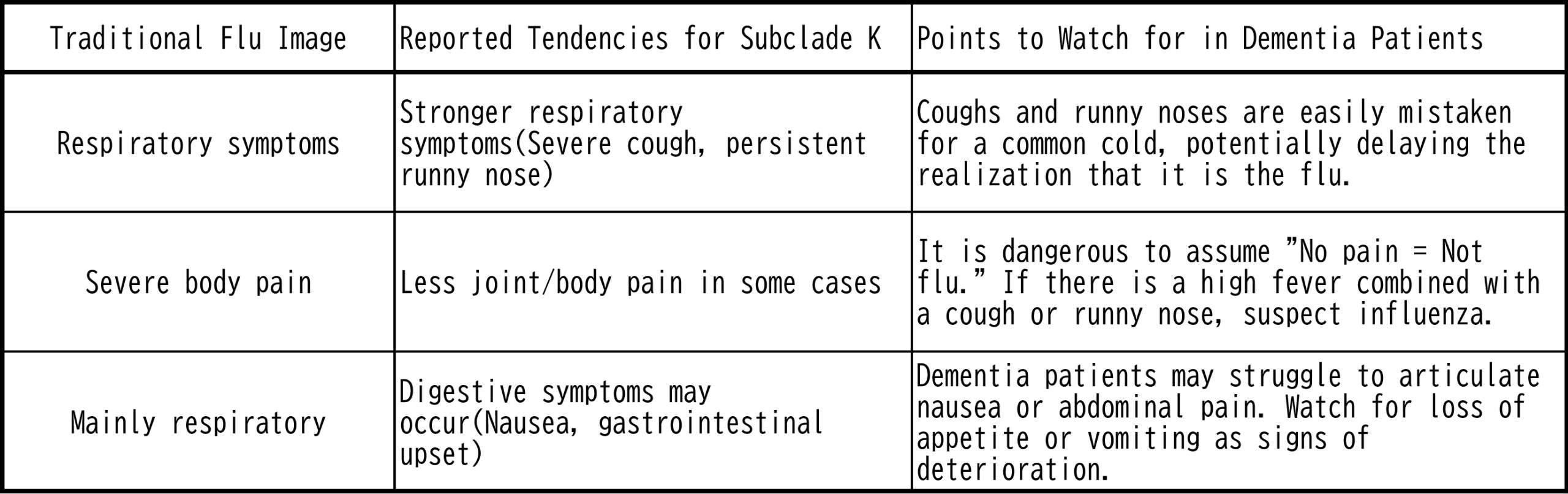
Note to Families :
Do not self-diagnose based on thoughts like “Their joints don’t hurt” or “It looks like just a cold.”
If the patient has a high fever (38°C/100.4°F or higher) accompanied by a cough and runny nose, please contact a medical institution immediately.
3. Three Key Precautions for Dementia Patients
For patients with dementia, an influenza infection poses significant risks, including a “rapid decline in cognitive function” and “severe illness.”
Please strictly observe the following points:
Point 1: The Risk of Unnoticed Symptoms
Watch for Non-Fever Signs : Be alert to behavioral changes.
Looking “spaced out,” loss of appetite, drinking less water, or sudden restlessness/agitation can all be signs of illness.
Routine Temperature Checks : Measure body temperature at a set time every day to catch even a slight fever.
Keep a record.
Point 2: Preventing the Vicious Cycle of Flu and Dementia
Prioritize Vaccination: Even with variants, vaccines are expected to prevent severe illness.
Consult the primary doctor and ensure vaccination.
Assisted Infection Control: Family members and caregivers should actively support hygiene practices.
Verbalize reminders and help with mask-wearing, hand washing, and gargling.
Prevent Dryness: Maintain appropriate humidity (40–60%) to keep mucous membranes moist and preserve their barrier function.
Point 3: Early Consultation and Rapid Diagnosis
Consult Immediately: If you notice anything unusual, do not take a “wait and see” approach.
Contact the primary doctor immediately for instructions.
Share Information: When visiting the doctor, bring a memo detailing “when the changes started and what specific changes occurred” to ensure accurate communication.
4. Stress Care for Families and Caregivers
During the flu season, the burden on families increases due to infection control and monitoring the patient’s condition.
Maintaining your own physical and mental health is a vital part of caregiving.
◇ Let Go of Perfectionism
Do not blame yourself if you cannot manage every aspect of care—such as hand washing or medication—perfectly.
Affirm yourself by acknowledging that you are doing the best you can.
◇ Take “Micro-Breaks”
Create time to completely detach from caregiving, even if just for a short while.
Ten minutes of deep breathing, listening to your favorite music, or slowly drinking a hot beverage can be a refreshing change of pace.
◇ Do Not Isolate Yourself
Do not bottle up anxiety or fatigue. Talk to local consultation centers, care managers, or trusted friends and relatives.
Actively relying on administrative or professional services protects both you and the patient.
◇ Prioritize Quality Sleep
Lack of sleep weakens the immune system, making you more susceptible to the flu.
If nighttime care is difficult, prioritize your sleep by temporarily using respite care services (such as Short Stay).
Protecting your own health is the first step in protecting the patient.
Let’s get through this season together by taking care of ourselves.
Reference : https://www.eurosurveillance.org/
E-mail magazine for overseas ◎ DISA NEWS ENGLISH
Please try to take a look at this website
You can purchase the high quality reishi supplement KOUKA efficacious for improving cognitive functions at DIS SHOP.
https://dis-shop.info/
